


Please before diving in, read this disclaimer.
Welcome to Hidden Market Gems
I look for listed companies the market has mislabelled. It is in the company hiding in plain sight, sitting on a chokepoint nobody has bothered to value. Every issue, I try to find one, take it apart, and tell you exactly where the mispricing is and where I might be wrong.
These past few weeks I have been running a themed season, the Agentic Economy. AI agents are about to climb out of the chat box and start acting in the real world, and the question I keep asking is which listed companies own the layers those agents will actually run on.

So far this season I have written about Snowflake, about Reddit as the ground the agents stand on, their layer of human trust, and about a third company I am keeping behind the paywall for now.
![[RDDT] The Mob That Became the Moat](https://substackcdn.com/image/fetch/$s_!K90x!,w_140,h_140,c_fill,f_webp,q_auto:good,fl_progressive:steep,g_auto/https%3A%2F%2Fsubstack-post-media.s3.amazonaws.com%2Fpublic%2Fimages%2F9e8d107a-7f14-4376-9cee-acd93eafc092_1024x500.png)

And more recently :

The article
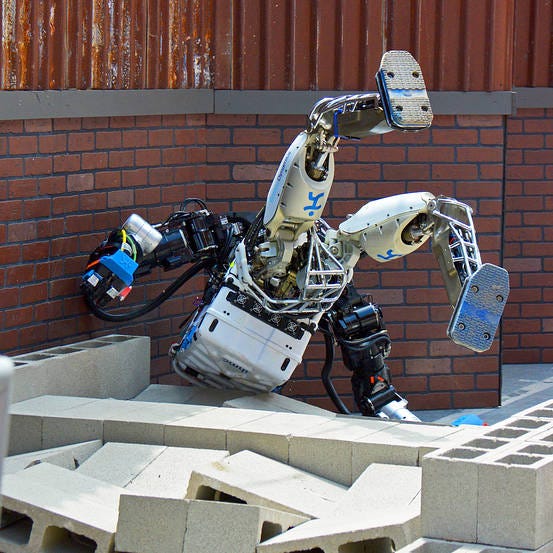
On 31 October 2000, in a Tokyo conference hall, Honda unveiled a 1.2-metre humanoid called ASIMO. It walked, it climbed stairs, it waved. In April 2014 it played football with Barack Obama at the Miraikan museum, and the President of the United States looked genuinely unsettled. ASIMO was, for two decades, the most famous robot on Earth, the product of one of the finest engineering cultures in industrial history, backed by a company that had already conquered motorcycles, cars and lawnmowers.
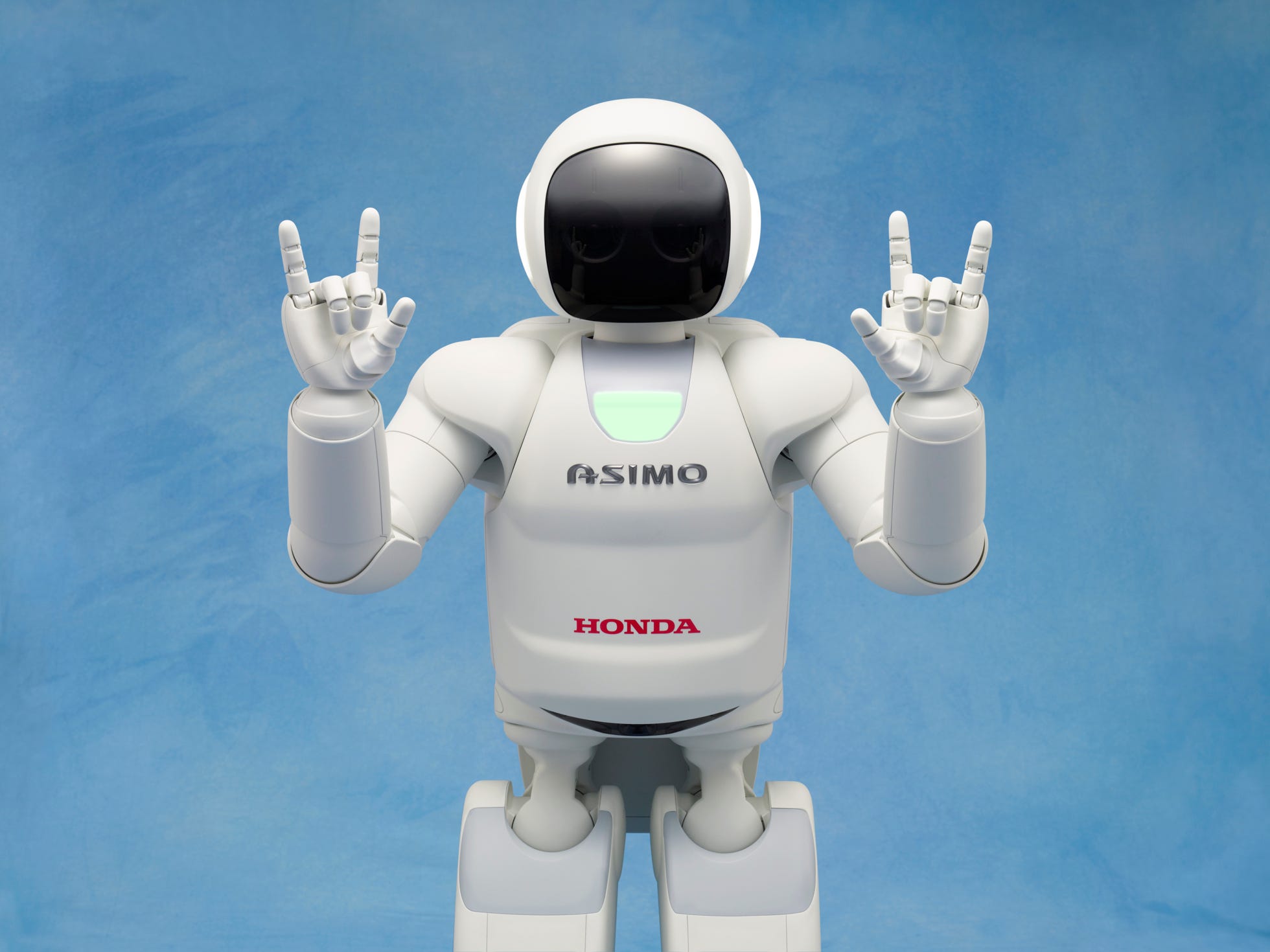
ASIMO’s dirty secret was its battery. Under an hour of operation, then back to the charging dock. Honda retired the programme in 2022, after roughly a quarter of a century and untold billions of yen, without ever solving the problem that killed it. The robot could dance. It could not do a job.
I open with ASIMO because the industry has spent the past three years pretending this problem has been solved by intelligence. (It has not). The models got smarter, spectacularly so but the physics did not move. And in that gap between what the demo videos promise and what thermodynamics permits sits, I believe, one of the most mispriced industrial options on the American market.
This deep dive is free. It follows the usual Hidden Market Gems structure: I will build the problem first, because the problem is the thesis. If you already know where this is going, indulge me anyway. The detour is the argument.
The problem: robots do not run out of ideas… indeed, they run out of watts
Start with the benchmark evolution handed us. A human being runs on roughly 100 watts, of which the brain takes about 20. Twenty watts to see, plan, converse, and catch a falling glass. Four billion years of ruthless energy optimisation produced the most efficient inference machine known.
Now look at what we are trying to sell into warehouses. A humanoid robot walking at human pace draws somewhere between 300 and 1,500 watts on locomotion alone, depending on the design, because dynamic balance requires constant actuator engagement and high-frequency control loops.
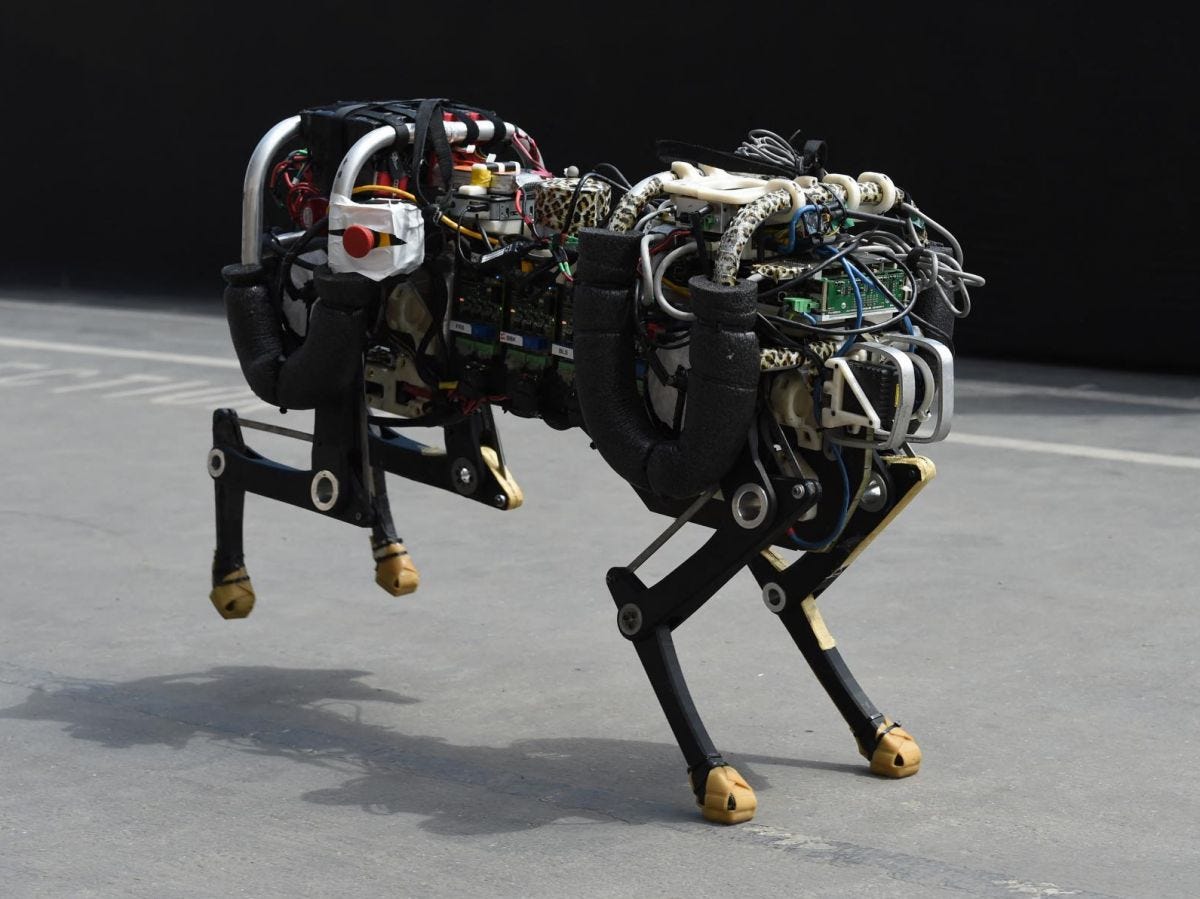
On top of that, the onboard computing needed for real-time perception, balance and task planning draws another 50 to 200 watts, continuously. The machine burns five to fifteen times a human’s energy budget to do a fraction of the work.
Against that outflow, the industry’s fuel tank is embarrassing.
1X’s NEO, the consumer humanoid launched with great fanfare, carries an 842 watt-hour battery targeting around four hours of light domestic use.
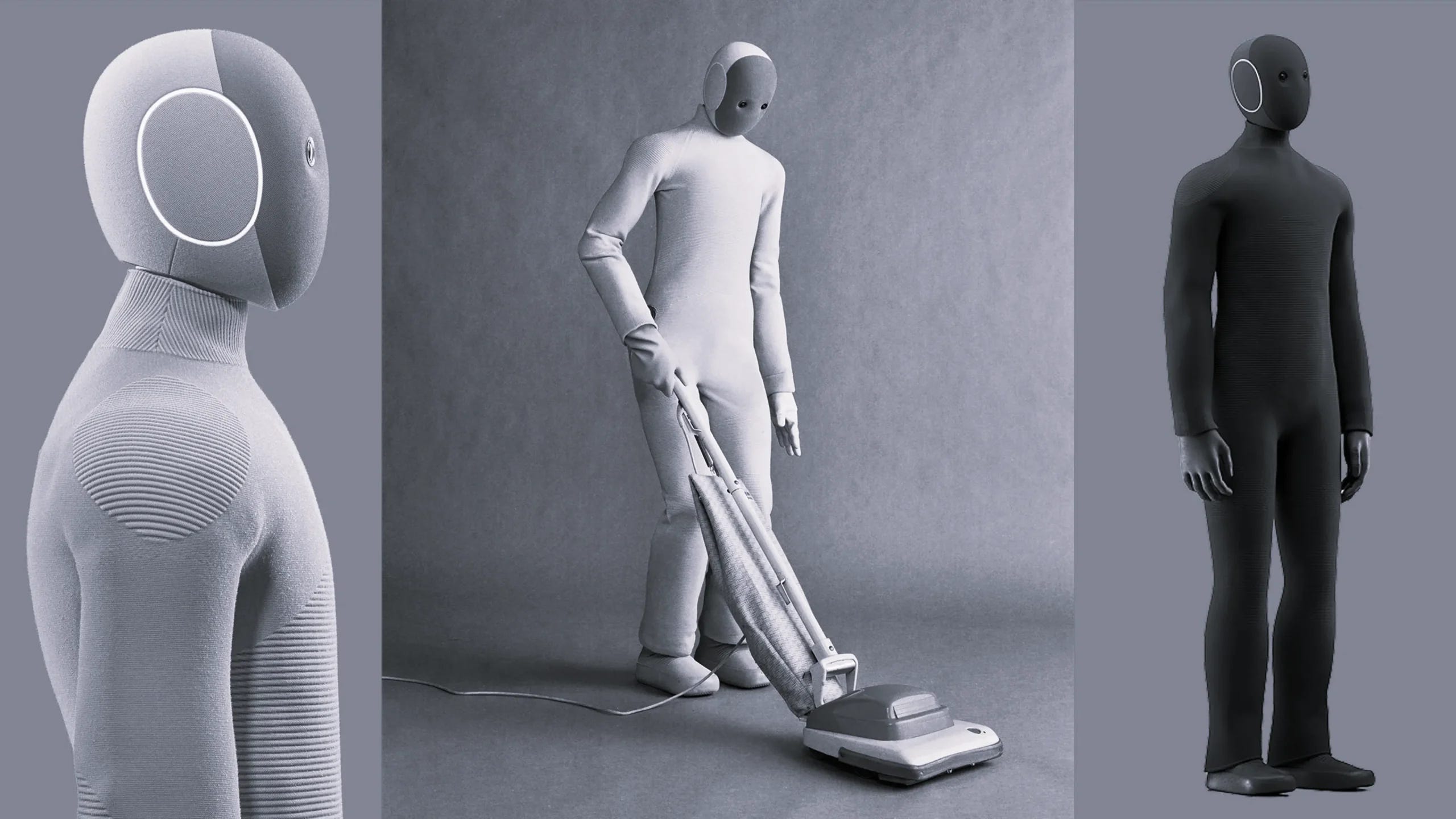
Nvidia’s own reference humanoid for academic research, announced at GTC Taipei this year, ships with a 0.972 kWh pack and roughly three hours of life. Tesla has associated Optimus with claims of up to four hours; Figure cites similar endurance. Independent reporting suggests that under real task loads, with payloads and imperfect floors and thermal throttling, actual runtimes fall closer to two and a half hours, and operators are advised to assume 60 to 70 per cent of stated figures. A factory shift is eight hours. Do the arithmetic on what a two-and-a-half-hour worker is worth.
Here is the part that matters for investors: none of the three levers available to fix this moves at the same speed.
Lever one is the battery. Lithium-ion energy density improves by low single digits per year. It is electrochemistry, not software; there is no Moore’s Law in the anode. Adding more cells adds mass, and mass increases the locomotion bill, a vicious circle every aerospace engineer knows by heart. Battery swapping, the workaround Agility Robotics has commercialised for Digit, is an admission of defeat dressed as a feature: it means buying spare packs, charging stations and downtime infrastructure before the robot has lifted a single box.
Lever two is the actuator. Motors and gearboxes improve, but they fight physics directly. Boston Dynamics has spent thirty years on this and Atlas still cannot approach the 80 watts a human spends walking.
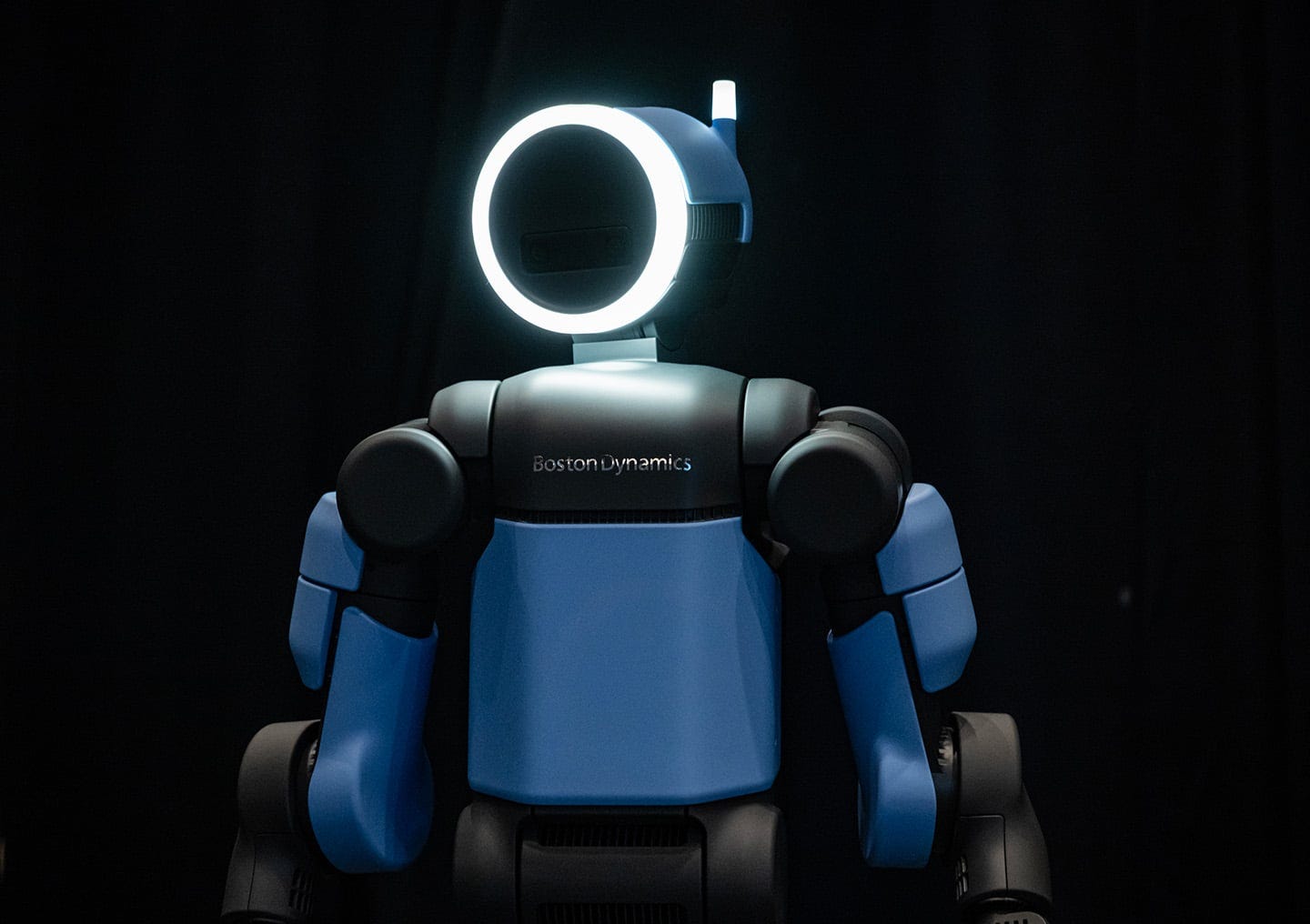
Lever three is the compute. And this is the only lever that moves on semiconductor time, doubling in efficiency every two to three process generations. It is also the lever whose demand curve is exploding, because the whole promise of the current robotics wave rests on running vision-language-action models onboard, in real time, with no cloud round-trip, since a robot that loses Wi-Fi cannot be allowed to lose its reflexes.
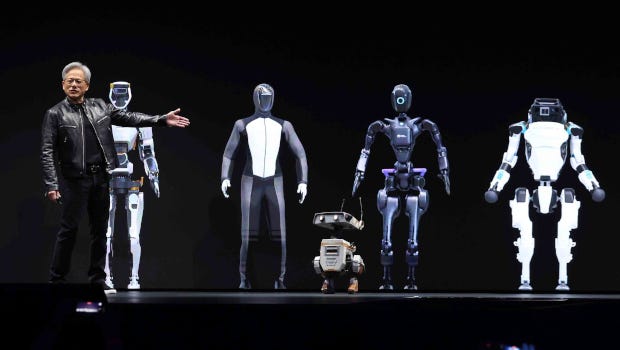
Nvidia’s Jetson Thor, the reference brain of the moment, delivers a monstrous 2,070 teraflops, inside a power envelope of 40 to 130 watts. Impressive engineering. But park that number next to the fuel tank: at the upper end, the brain alone consumes an eighth of NEO’s entire battery every hour, before the robot has moved a limb.
Every watt fed to silicon is a watt denied to the arms, and every watt of silicon becomes heat, which demands fans, which add weight, noise and failure modes to a machine that is supposed to work next to your grandmother.
Descend the funnel with me, the way I always do. Our season is the Agentic Economy, the macro theme is physical AI, robots doing labour, a market every sell-side desk now models in the trillions. The physical input that theme cannot scale without is untethered energy autonomy: a robot must finish a shift or it is a broken toy. The manufacturable chokepoint inside that constraint is not the battery for me, which improves glacially, nor the actuator, which fights Newton, but the performance-per-watt of onboard inference silicon, the only component on a two-year improvement cycle. So the question that decides the sector becomes almost comically specific: which company on Earth has spent the longest time being commercially punished for every wasted milliwatt?
There is exactly one industry where a chip that ran hot meant a product that died in the market: the smartphone. A phone has no fan, no mains cable, and a customer who checks battery percentage forty times a day. For thirty years, one company’s entire institutional culture, its compiler teams, its NPU architects, its power-management engineers, was forged under that discipline while the data-centre world learnt to solve every problem by adding another kilowatt. The data-centre giants are now climbing down towards the robot from above, shrinking server parts. This company is climbing up towards the robot from below, from the pocket. The robot’s binding constraint says only one of those directions is home turf.
Before I name it, the questions this deep dive will answer, in order:
Why could Honda not fix ASIMO with money, and why can nobody fix today’s humanoids with batteries?
How does a chipmaker built for pockets end up supplying the brain of a humanoid, and what exactly did it announce at CES in January 2026?
Why did Figure, the most prominent customer of Nvidia’s robotics platform, publicly sign with this company to define its next-generation compute architecture?
Is this simply the automotive playbook re-run, and what did that playbook actually deliver in dollars?
If robotics revenue is a rounding error today, on what grounds do I call this my purest listed robotics play?
What about the melting core: handsets in decline, Apple walking away, Chinese OEMs going in-house?
What is the market paying today for the robotics option, and my answer is close to nothing?
Which catalysts over the next twenty-four months would prove or kill the thesis?
If Hidden Market Gems is useful to you, this is where I usually place the paywall. Today the whole piece is free, thanks to Gem Partners, the pay subscribers of Hidden Market Gems, but the next ones coming will stay behind the paywall, so consider this the honesty box: a paid subscription funds the verification work behind every article, and the archive of theses that came before this one.

The company
Qualcomm Incorporated.
NASDAQ: QCOM 0.00%↑
Qualcomm was founded in San Diego in 1985 by Irwin Jacobs and six colleagues, and it is one of the strangest great companies in America. It won the mobile era twice: once with CDMA patents that entitle it to a royalty on essentially every 3G, 4G and 5G device sold on the planet, the QTL segment, a licensing annuity that still runs at a 72% pre-tax margin; and once with Snapdragon, the QCT segment, the system-on-chip inside most of the world’s premium Android phones.
It has survived a hostile takeover by Broadcom blocked on national-security grounds in 2018, a collapsed $44 billion bid for NXP killed by Chinese regulators the same year, a two-year legal war with Apple settled in 2019, and an existential licensing dispute with Arm that a Delaware jury resolved in Qualcomm’s favour in December 2024. This is a company with scar tissue. It does not panic.
The relevant history for us starts in 2021, when Qualcomm paid $1.4 billion for Nuvia, a startup founded by Apple’s former chip architects, and got the Oryon CPU core, its declaration of independence from off-the-shelf Arm designs. Oryon now sits in laptops, in phones, and, as of January 2026, in something new.
The opportunity
At CES 2026 on 5 January, Qualcomm announced the Dragonwing IQ10, its premium robotics processor for autonomous mobile robots and full-size humanoids, and framed itself, in its own words, as a pioneer in energy-efficient Physical AI systems.
The numbers deserve attention: 18 Oryon cores, up to 700 TOPS of sparse AI compute, support for up to 20 concurrent camera streams, five times the performance of its predecessor. The direct descendant of the silicon that learnt its manners in a fanless slab of glass in your pocket, scaled up to a robot’s torso.
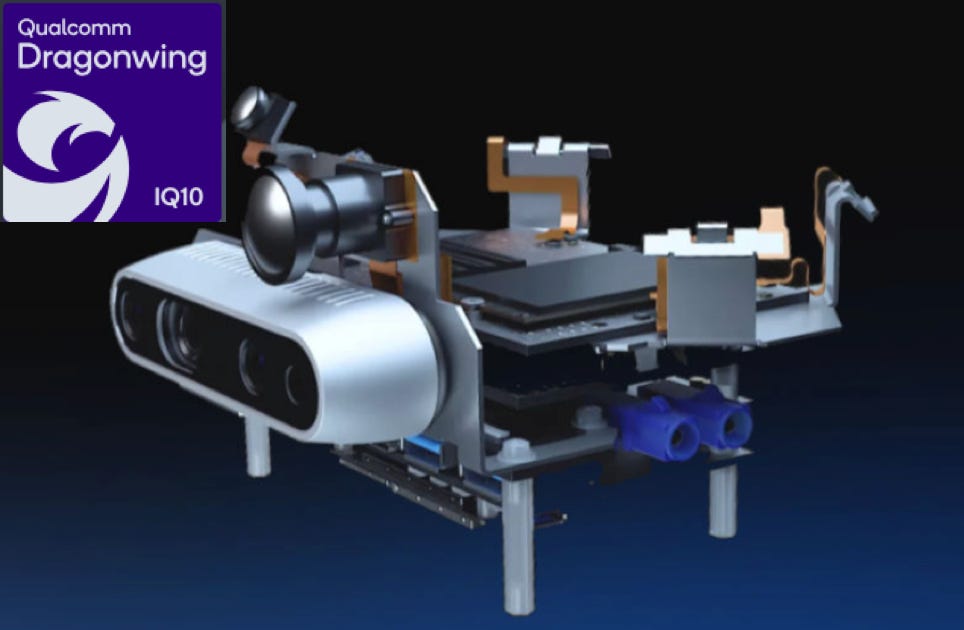
Around the chip, Qualcomm has quietly assembled a full stack. Five acquisitions in eighteen months:
Arduino, the Italian open-source board maker that owns the world’s hobbyist and prototyping mindshare;
Edge Impulse for edge-AI development tooling;
Foundries.io for secure Linux deployment;
Focus.AI; and Augentix for low-power vision.
Then, in December 2025, the $2.4 billion acquisition of Alphawave Semi closed a quarter ahead of schedule, bringing high-speed connectivity IP that feeds both the data-centre push and the sensor-heavy robotics stack.
At Computex in June 2026 came the Dragonwing IQ10 Robotics Reference Design, a sealed, deployment-ready box with native support for: twelve GMSL2 cameras, LiDAR, deterministic EtherCAT and CAN-FD control, a functional-safety island, and an operating range of minus 40 to 70 degrees Celsius, in early access now and globally available in September 2026.
Read that specification list again, now we are talking baby! Because these component are designed to be bolted into a production robot on an assembly line!
Now the answers to the questions, in order.
Why could Honda not fix ASIMO with money, and why can nobody fix today’s humanoids with batteries?
Because the constraint with robots is thermodynamic. ASIMO predated modern AI, so its failure is often misread as a software problem. It was an energy problem, and the energy problem outlived the software revolution intact. Battery energy density creeps forward a few per cent a year while the compute appetite of vision-language-action models compounds much faster. When your fuel tank improves arithmetically and one line of your consumption improves geometrically, the rational engineering response is to attack the geometric line. That line is silicon efficiency, and it is the only line a robot maker can upgrade every product cycle without waiting for a chemistry miracle… Even if we bought the one that could create this miracle …😉

How does a chipmaker built for pockets end up supplying the brain of a humanoid, and what exactly did it announce at CES in January 2026?
Through the least glamorous inheritance in semiconductors: the thermal envelope. A flagship phone must run a neural network, a camera pipeline and a modem inside roughly five watts, with no fan, pressed against human skin. Qualcomm’s Hexagon NPU, its power-island architecture, its dynamic voltage scaling, all of it exists because a phone that throttles gets destroyed in reviews.
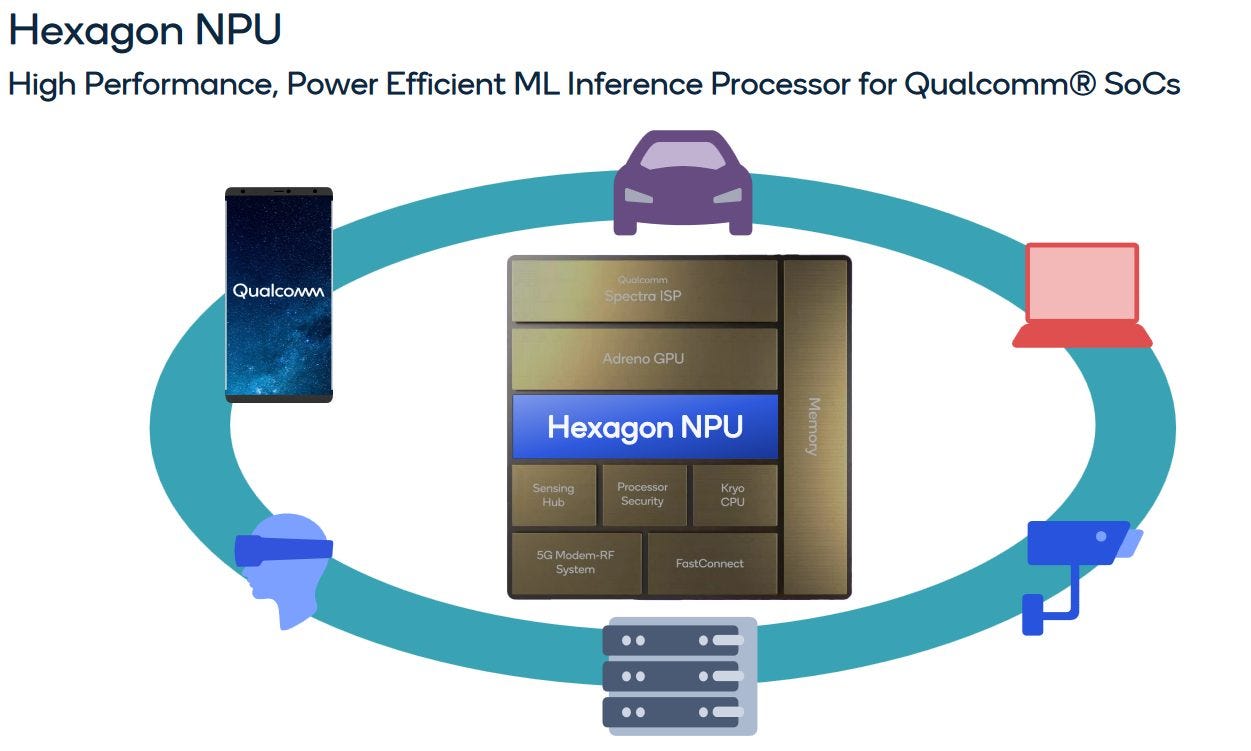
Nvidia’s genius grew up in a world where the answer to heat was a bigger heatsink and the answer to power was a bigger PSU. Both companies are converging on the same robot from opposite ends of the wattage spectrum, and I would simply observe that the robot’s spec sheet reads like a phone’s, not like a server’s: battery-powered, thermally sealed, safety-critical, always on. This is like i like to call it a good “Gymnastic Opportuniste” or '“Opportunistic Pivot” (based on a tech you already ship), in its purest form, a legacy discipline becoming the critical infrastructure of a megatrend without the company changing what it fundamentally does… magic.
Why did Figure, the most prominent customer of Nvidia’s robotics platform, publicly sign with this company to define its next-generation compute architecture?
Because Figure is the tell. Brett Adcock’s company is arguably the most closely watched humanoid startup in the West, an early and vocal adopter of Nvidia’s Jetson Thor, whose praise for Nvidia’s server-class performance is quoted in Nvidia’s own launch materials.
Yet at CES 2026, Figure appeared on Qualcomm’s stage, with Adcock stating that Qualcomm’s combination of compute and energy efficiency is a valuable building block for scaling its humanoids, and the two companies announcing a collaboration to define the next generation of compute architecture as Figure scales.
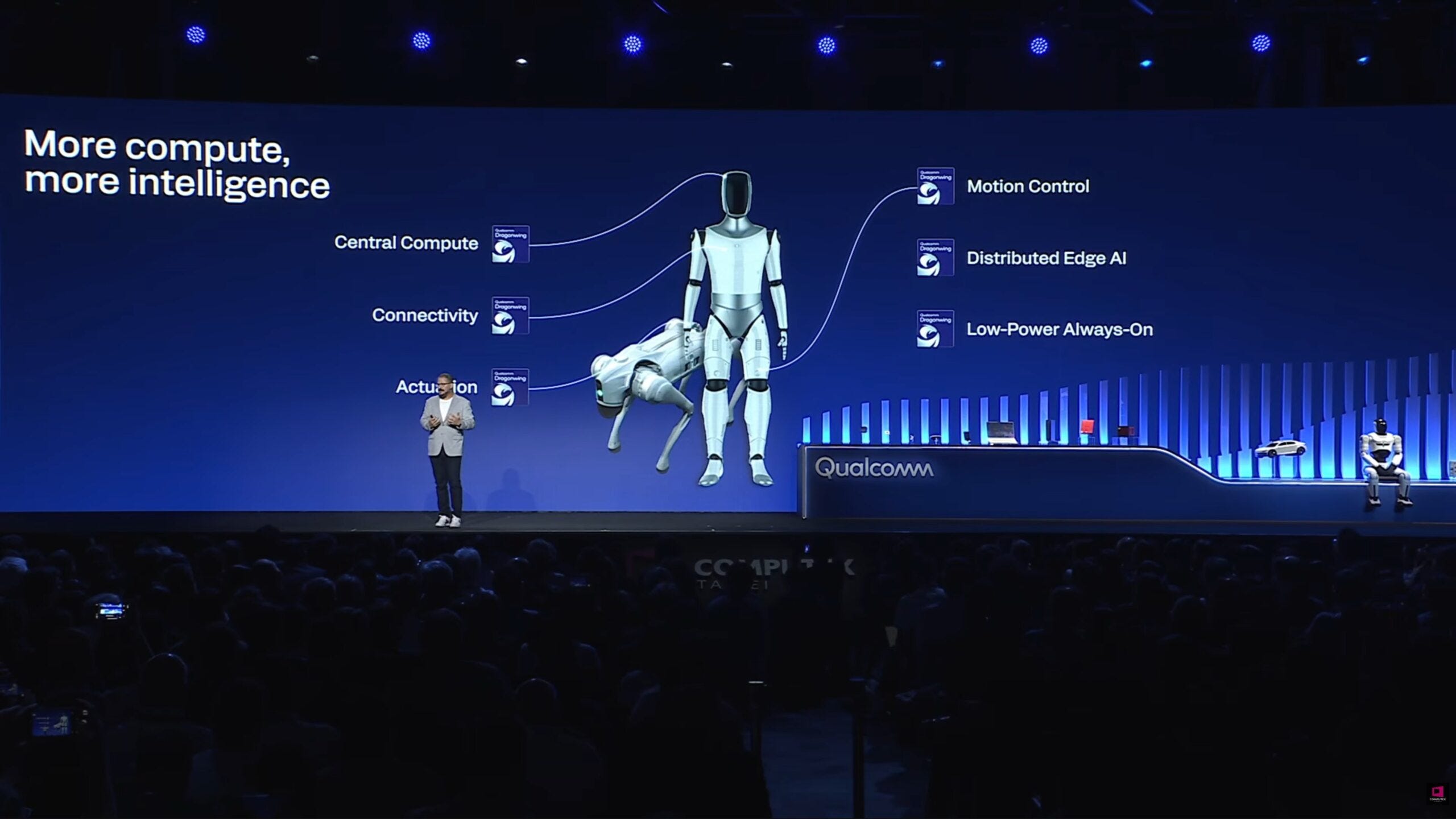
Companies do not co-sign architecture partnerships with their supplier’s arch-rival for fun, usually, they do it when the current supplier’s power envelope is hurting the product roadmap, (look at AI Labs for isntance).
Alongside Figure sit Kuka Robotics, Booster, VinMotion, and, since March 2026, Germany’s NEURA Robotics in a long-term collaboration on what the two call Brain plus Nervous System reference architectures. The customer list is telling you where the pain is… Qualcomm is the cure.
Is this simply the automotive playbook re-run, and what did that playbook actually deliver in dollars?
Precisely, and that is the strongest part of the case, because the playbook has now printed numbers. A decade ago Qualcomm entered cars with connectivity chips, expanded into cockpit compute, then into ADAS with Snapdragon Ride, layering software and design wins that convert into revenue years later. In the quarter ended March 2026, automotive revenue hit a record $1.33 billion, up 38% year on year, crossing $5 billion annualised for the first time, with management guiding to an exit run rate above $6 billion this fiscal year and over one million cars already running ADAS on Snapdragon Ride.
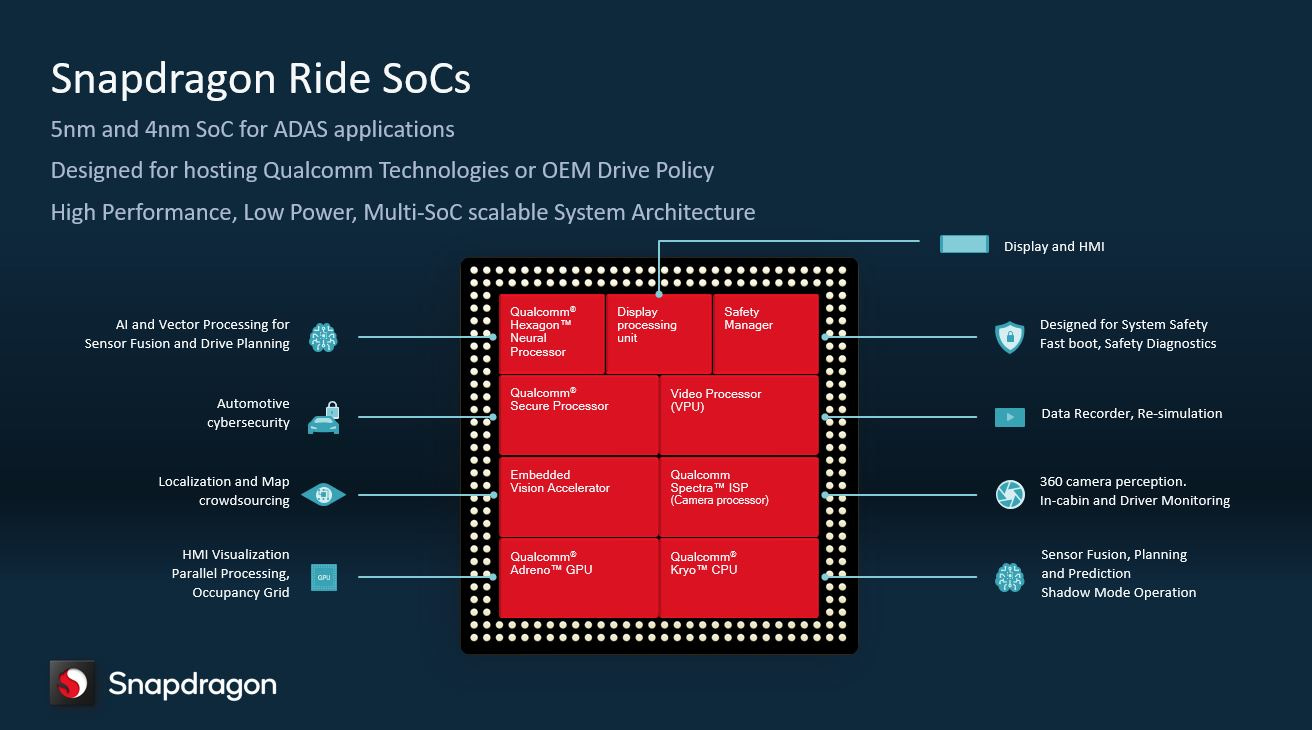
That business was a rounding error in 2019 and a laughing stock to sceptics who said carmakers would never trust a phone company. Robotics is automotive circa 2018: same organisation, same executive (Nakul Duggal runs automotive, industrial and robotics as one group), same full-stack method, aimed at a market at a comparable stage of maturity. Here i pay for a machine that has already demonstrated it can industrialise exactly this kind of adjacency.
If robotics revenue is a rounding error today, on what grounds do I call this my purest listed robotics play?
Let me be honest about the tensions Emerald brought to my attention, because they are real but I have answers!
First, Qualcomm is covered by more than thirty analysts; nothing here is undiscovered (it’s not a hidden market gem). Our edge is classification here. The market files QCOM 0.00%↑ under declining smartphone supplier, prices it at roughly 19 times forward earnings against 30 to 50 times for anything wearing an AI label, and assigns the robotics platform a value indistinguishable from zero, which is arithmetically fair since the revenue is currently immaterial, and strategically absurd since the design wins are being signed now for robots shipping in 2027 and 2028.
Second, the pure-play objection: 57% of QCT revenue is still handsets, so how is this pure?
My answer is that the actual pure plays are uninvestable. Figure is private at a fantasy valuation. 1X is private. Unitree is heading for a Shanghai listing with all the access and governance caveats that entails. Nvidia gives you robotics diluted homeopathically into a $4 trillion data-centre position.
Qualcomm is the purest listed, liquid, cash-generative exposure to the specific chokepoint I identified, performance-per-watt at the edge, and you are paid a growing dividend and $20 billion of freshly authorised buybacks while the option matures.
I would rather own the misfiled asset than the correctly filed lottery ticket, but if you follow me since time now you know that.
What about the melting core: handsets in decline, Apple walking away, Chinese OEMs going in-house?
Do not look away from it. Handset revenue fell 13% year on year last quarter to $6.0 billion, pressured by memory-cost chaos and cautious Chinese OEM builds… Plus Apple is migrating to its own in-house modem, and analyst projections see Qualcomm’s share of that business falling towards 20% by late 2026 (we are in June when writing this), shrinking a revenue stream that peaked above $9 billion towards roughly $2 billion by fiscal 2027.
Samsung and the Chinese flagships flirt with in-house silicon every cycle. This is precisely why the stock trades where it does, and management, to its credit, guided the June quarter conservatively and called the Chinese handset bottom for the September quarter.
My read is that the market has fully priced the melt and priced none of the build: automotive plus IoT grew 20 per cent combined last year-on-year quarter, the AI200 data-centre inference chips ship this year with Meta and Microsoft named as early partners at June’s investor day, and QTL’s royalty annuity keeps compounding quietly underneath.
The bear case is known to the last decimal.
But the bull is still filed under miscellaneous.
What is the market paying today for the robotics option, and my answer is close to nothing?
At around 19 times forward earnings and roughly 16 times EV to free cash flow (when writing this), I am paying a market multiple for the licensing annuity plus a proven $6 billion automotive franchise, and receiving the robotics platform, the data-centre entry and the Arduino developer ecosystem approximately free.
Bernstein, notably, recently framed the Nvidia-versus-Qualcomm question in robotics AI as a live debate, which tells you the sell side is beginning to reopen the file. When a debate reopens on a stock priced for no debate, the asymmetry favours the owner.
Which catalysts over the next twenty-four months would prove or kill the thesis?
September 2026: global availability of the IQ10 Robotics Reference Design, the moment the platform stops being a CES demo and starts being a purchase order.
Fiscal 2027: management’s claim of billions in data-centre revenue meets its first audit by reality. 2027: named humanoid programmes from Figure, NEURA, Booster and VinMotion either ship on Dragonwing at volume or they do not.
Each earnings call: watch IoT segment growth, currently 9 per cent, because robotics revenue will surface there first, unlabelled, exactly the way automotive once hid inside a footnote. And watch one number outside Qualcomm entirely: independently measured humanoid runtimes.
Every review that clocks a robot dying mid-shift is free marketing for the performance-per-watt argument.
My View
I think the humanoid robotics market is currently making the same category error the AI market made in 2023, mistaking intelligence for product.
The product is a machine that finishes a shift, and the shift is won or lost in watts.
I believe Qualcomm is the only company of scale whose entire engineering culture was built under exactly that constraint, and I suspect the Figure partnership will be read, in three years, as the moment the industry’s centre of gravity began shifting from teraflops to teraflops-per-watt.
I have a long memory for Qualcomm’s automotive pivot, I watched the market laugh at it at $500 million of revenue, and I am watching the same people ignore robotics at approximately zero.
The position is not without teeth in the near term, the handset decline is real and the memory-cost environment is ugly, so I treat this as a two-to-three-year thesis, sized accordingly, bought for the annuity and held for the option.
If the September reference design ships into silence, if Figure quietly reverts to a single supplier, if IoT growth stalls below 5 per cent for three consecutive quarters, I will revisit. Until then, my read is simple: ASIMO died because nobody built it the right brain at the right wattage.
Somebody finally is, and the market is charging you nothing for it.
I am adding Qualcomm to my portfolio.
— Hidden Market Gems